Call us for any question+(91)-8488868585
Call us for any question+(91)-8488868585

Jan 13, 2026
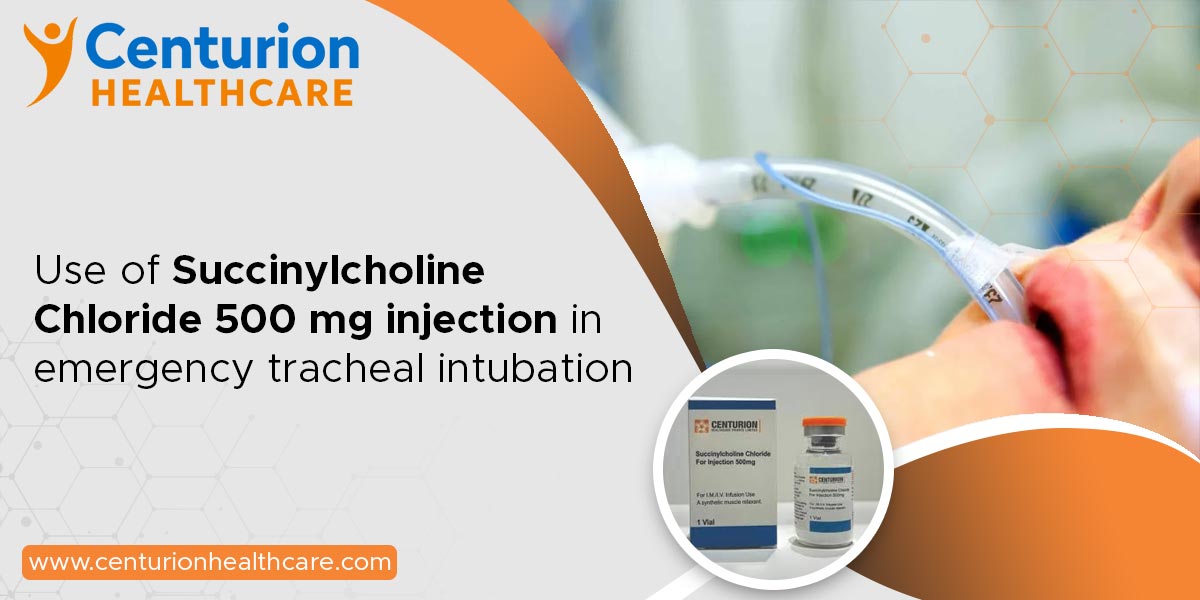
In emergency medicine, airway control is never optional. It is urgent. It is decisive. We act when breathing fails, oxygen drops, and panic rises. In such moments, Succinylcholine chloride 500 mg injectionbecomes a critical support tool. At Centurion Healthcare, we recognise how much trust clinicians place in this medicine. We work closely with emergency teams who operate under intense pressure. Our focus remains on reliability, safety, and clarity. We believe emergency care needs medicines that work fast and predictably. This belief shapes how we support hospitals across India. When lives depend on timing, dependable pharmacology matters.
Knowing emergency Tracheal intubation in real settings:
Emergency airway management differs from planned procedures. There is no time for delay or repeated attempts. We often face trauma, aspiration risk, swelling, or poor oxygen levels. These factors raise failure risk with every second lost. Rapid muscle relaxation improves visibility and control. That control reduces repeated laryngoscopy attempts. Fewer attempts reduce airway injury and oxygen loss. This cause-and-effect relationship drives clinical decisions. Emergency teams rely on short-acting neuromuscular agents for this reason. We see intubation succeed faster when muscle resistance drops quickly. This clarity supports calm execution during high-stress events.
Why rapid neuromuscular action changes outcomes?
Speed shapes emergency outcomes more than precision alone. Fast-onset paralysis creates a still airway. That stillness allows accurate tube placement. Oxygen delivery resumes sooner. Brain injury risk drops. Cardiac stress lowers. These outcomes connect directly to drug action speed. Short duration also limits prolonged paralysis. Once the airway is secure, spontaneous recovery begins quickly. This balance supports emergency workflows. We see this benefit clearly in crash intubations. Rapid effect prevents escalating complications. This is why emergency protocols often prioritise fast-acting agents over longer options.
Clinical decision-making and patient safety considerations:
Emergency medicine never ignores risk. Screening remains essential, even under pressure. We assess the history of burns, muscle disease, or electrolyte imbalance. These conditions influence agent choice. Preparation prevents adverse effects during crisis care. Proper dosing based on weight ensures predictable action. Clear labelling helps avoid confusion during emergencies. We also prepare for side effects such as muscle soreness or heart rhythm changes. Awareness improves response speed if issues arise. When used correctly, this medicine supports safety rather than compromising it. We believe training and readiness define successful emergency use.
Role alongside general anaesthetic support:
Airway control often requires more than paralysis alone. Comfort and awareness matter, even in emergencies. In some cases, clinicians pair neuromuscular agents with general anaesthetics. This pairing reduces distress while preserving speed. The goal remains controlled airway access, not prolonged sedation. We support protocols that balance speed with humane care. This approach respects patient dignity even in critical moments. Practical experience shows better outcomes when teams prepare both agents in advance. Emergency success often depends on preparation rather than improvisation.
Real-world emergency use-case examples:
Consider a road accident victim with facial trauma. Swelling blocks visibility. Oxygen levels fall rapidly. Rapid paralysis allows immediate airway control. Another case involves severe asthma with exhaustion. Breathing fails despite ventilation support. Fast muscle relaxation enables intubation before cardiac arrest risk rises. In seizure emergencies, airway protection prevents aspiration. Short-duration action helps regain spontaneous breathing sooner. These examples show clear cause and effect. Timely intervention prevents cascading complications. We learn from these cases and refine guidance continuously. Experience shapes better protocols.
Manufacturing quality and responsibility in emergencies:
Emergency medicines demand absolute consistency. Variability introduces risk during critical moments. As a Succinylcholine chloride 500 mg injection manufacturer in India, we focus on batch stability and strict quality systems. Our processes align with international safety standards. This approach reflects the maturity of the Indian pharmaceutical industry. We believe emergency medicines deserve higher scrutiny, not lower. Hospitals rely on predictable performance. That reliance drives our manufacturing discipline. Quality failures during emergencies are unacceptable. We design systems to prevent them.
Supply continuity and national healthcare support:
Availability matters as much as efficacy. Shortages force substitutions that may slow care. As a Succinylcholine chloride 500 mg injection supplier in India, we prioritise uninterrupted supply chains. We coordinate closely with hospitals and distributors. This planning reduces last-minute procurement stress. We also support global demand responsibly as a Succinylcholine chloride 500 mg injection exporter in India. Export strength should never weaken domestic availability. We balance both through careful forecasting. Reliable access supports emergency readiness nationwide.
Trust built through experience and compliance:
Trust grows through consistency over time. We operate with transparency and regulatory discipline. Our documentation supports audits and hospital reviews. This commitment places us among respected pharma manufacturing companies in India. Emergency teams deserve partners who understand urgency. We listen to clinician feedback and adapt accordingly. This dialogue strengthens both product use and outcomes. Centurion Healthcare builds relationships based on performance, not promises. Experience remains our strongest credential.
Practical implications for emergency teams:
Preparedness defines emergency success. Stocking, training, and protocol clarity reduce hesitation. Clear dosing charts and labelled kits save time. Regular drills improve muscle memory under stress. Teams that prepare perform better during real emergencies. We support education initiatives that reinforce safe use. Practical readiness reduces cognitive overload. This approach turns urgency into controlled action. Every improvement in preparation improves patient outcomes. Small steps create a major impact.
Final Thoughts:
Emergency airway management leaves no room for uncertainty. Speed, safety, and trust must align perfectly. This medicine supports that balance when used with care. We believe experience, preparation, and quality shape outcomes. Centurion Healthcare remains committed to supporting emergency care across India. Our focus stays on reliability, responsibility, and patient safety. When seconds decide lives, dependable choices make all the difference.